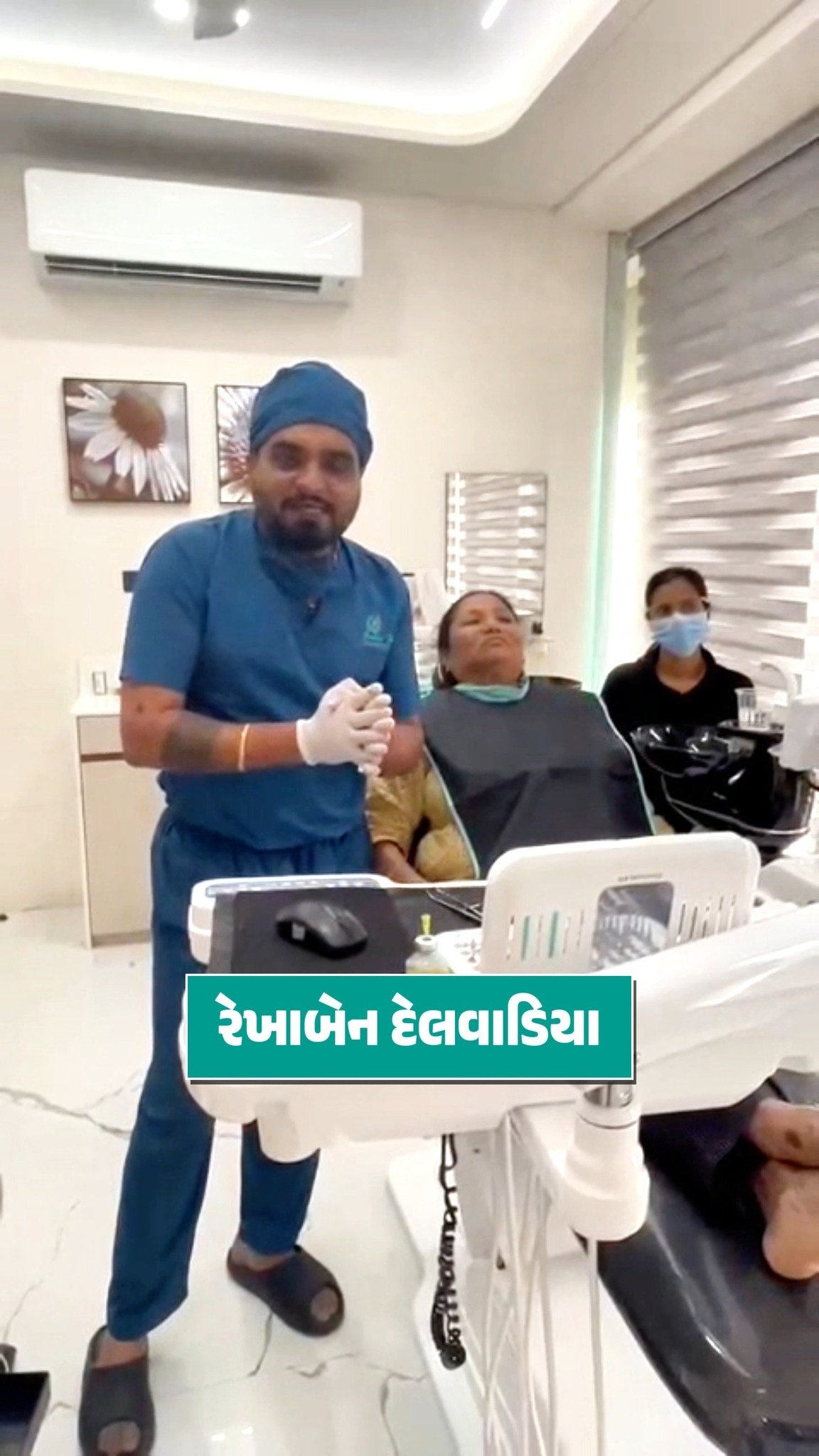
Guided Back-Tooth Dental Implant Case: Restoring Chewing Strength and Comfort for Rekhaben Delvadiya
Missing back teeth can quietly change how you eat, chew, and use your jaw every day. Many people focus on front teeth when thinking about their smile, yet molars and back teeth do the heavy lifting whenever we enjoy a meal. In this article, we share an overview of a smooth back-tooth dental implant case featuring Rekhaben Delvadiya at Smile Plus Hospital, Rajkot, including how guided implant placement and a post-surgery OPG scan fit into the process.
Why Back Teeth Matter So Much
Your back teeth—the premolars and molars—are built to handle bite force and break down food thoroughly before swallowing. When one or more back teeth are missing, chewing often shifts to one side or moves forward toward teeth that were not designed to take that extra load.
Over time, missing back teeth can affect everyday comfort in practical ways:
- Uneven chewing habits: People may chew more on one side of the mouth, which can feel tiring or awkward during meals.
- Reduced biting support: Losing back teeth removes helpful support between the upper and lower jaws.
- Changing bite balance: Neighbouring or opposing teeth can experience different forces when chewing patterns shift.
At the same time, preserving natural teeth whenever appropriate—while excluding wisdom teeth when they are not needed or functional—helps maintain a practical, balanced bite. Placing a dental implant right up to the last natural tooth (excluding wisdom teeth) is aimed at restoring support where it is needed most.
Understanding Dental Implants for Back Teeth
A dental implant is a tooth replacement option designed to support a restoration in the jaw where a natural tooth is missing. When planning back-tooth implants, dentists look closely at bone availability, spacing, bite alignment, and how the back of the mouth opens and functions.
Back teeth sit further inside the mouth, which can make visibility and access more demanding than front teeth. Careful planning before the procedure helps map out exact positions so the implant aligns well with the surrounding teeth and bite.
What Is Guided Surgery in Implant Dentistry?
Guided surgery uses digital planning and a custom surgical guide to help place dental implants along a planned path and position. Instead of relying solely on freehand estimation during the procedure, the guide helps translate pre-planned measurements directly to the treatment site.
For patients and clinicians, guided implant placement offers clear practical advantages:
- Planned accuracy: It helps position the implant accurately in the intended spot and angle.
- Streamlined procedure: Having a clear guide supports a controlled, predictable placement process.
- Comfort for the patient: Careful planning and gentle technique contribute to a smoother experience during and after placement.
In Rekhaben Delvadiya’s case, guided surgery played a key role in placing the back implants accurately right up to the last natural tooth (excluding wisdom teeth).
Patient Cooperation and Comfort During the Procedure
Every dental procedure goes more smoothly when the patient feels supported and comfortable. In this case, Rekhaben opened wide comfortably and cooperated throughout the appointment. That cooperation, paired with guided surgery, allowed the back implants to be placed smoothly with no discomfort at all.
Many patients feel nervous before getting dental implants, especially when they hear words like “surgery” or think about working near the back of the mouth. Knowing what to expect, asking questions during consultation, and taking the procedure step by step can make a big difference in how calm and confident you feel on the day of treatment.
The Role of the Post-Surgery OPG Scan
After implant placement, imaging helps the dental team review how the implants sit in relation to nearby structures and the jaw. In this case, Rekhaben’s case is shared alongside her post-surgery OPG scan (orthopantomogram—a broad panoramic dental X-ray that shows the upper and lower jaws, teeth, and surrounding areas in one view).
A post-surgery OPG scan helps document and verify placement in a clear overview image and supports follow-up planning as healing progresses toward final restoration. Your dentist will explain what follow-up steps and care routines fit your specific case.
Caring for Your Smile After Implant Placement
Once dental implants are placed, following your dentist’s post-procedure instructions is essential. Every patient’s healing timeline and restoration plan can vary based on bone health, number of implants, and overall oral care.
General good habits that support long-term oral health include:
- Following all specific aftercare instructions given by your dentist after the visit
- Keeping up with scheduled review and follow-up appointments
- Brushing gently and cleaning around teeth and restorations as advised
- Letting your dental team know promptly if anything feels unusual or uncomfortable
Considering Dental Implants in Rajkot?
If you or a family member are missing back teeth and wondering whether dental implants could help restore chewing comfort and support, a personal evaluation is the best place to start. A dentist can examine your teeth and gums, take appropriate scans or X-rays, and discuss whether guided implant placement is suitable for you.
Visit Smile Plus Hospital, Rajkot
You can learn more about dental implant options or book an appointment at Smile Plus Hospital, Rajkot:
- Address: 2nd Floor, PAN EMPIRE, Nana Mava Circle, Opp. Silver Heights, Rajkot, Gujarat 360005
- Appointments: +91 78 78 77 00 77