Benefits of Chemical Peel Treatment for Healthy and Glowing Skin
Healthy and glowing skin can help you feel more confident. However, problems like acne, dark spots, pigmentation, fine lines, wrinkles, and uneven skin tone can affect the look of your skin. Dust, sun exposure, ageing, and dead skin cells can also make your skin look dull. A chemical peel is one of the skin treatments that may help improve these concerns.
At Smile Plus Hospital, Rajkot, you can consult a skin care professional to understand whether chemical peel treatment is suitable for your skin. The right treatment depends on your skin type, skin condition, and personal goals.
In this article, we will explain the benefits of chemical peel treatment, how it works, who may benefit from it, and how to care for your skin after treatment.
What Is Chemical Peel Treatment?
A chemical peel is a skin treatment that uses a specially selected chemical solution to remove damaged skin cells from the surface or deeper layers of the skin, depending on the type of peel.
This process helps the skin renew itself and may improve skin texture, uneven skin tone, mild acne, dark spots, and some signs of ageing.
Top Benefits of Chemical Peel Treatment
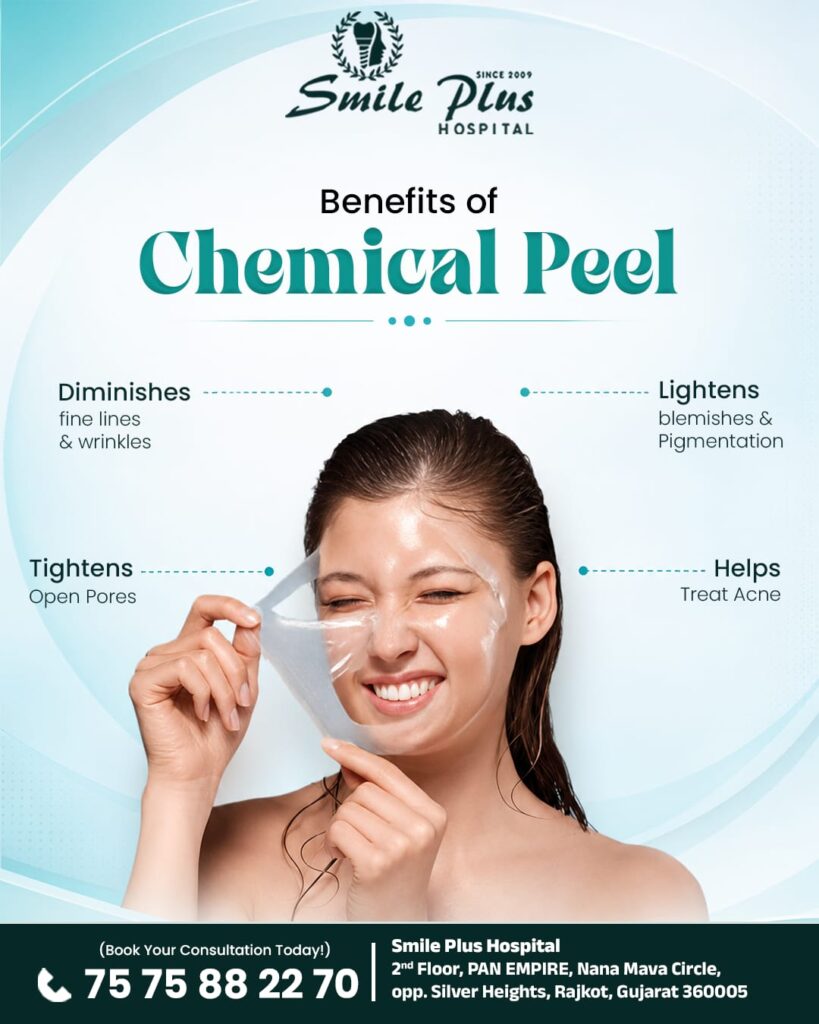
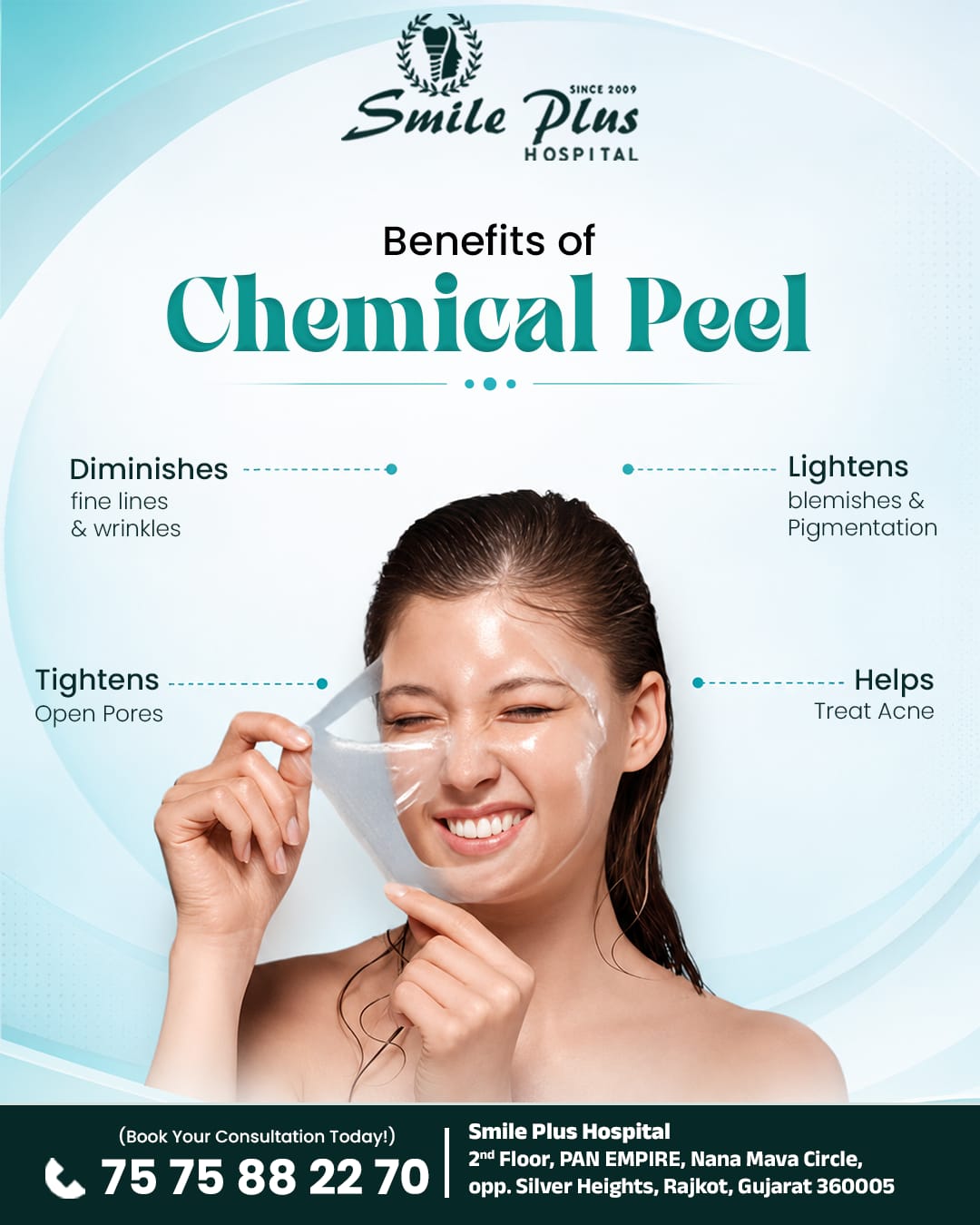
1. Helps Reduce Fine Lines and Wrinkles
Fine lines and wrinkles can develop as the skin ages. Sun exposure and other environmental factors can also contribute to changes in skin texture.
Certain chemical peels help remove damaged outer skin cells and support skin renewal. This may make some fine lines less noticeable and help the skin look smoother.
2. Helps Reduce Dark Spots and Pigmentation
Dark spots and pigmentation can appear because of sun exposure, acne, hormonal changes, or skin irritation. These marks may make the skin tone look uneven.
Some chemical peels help improve the appearance of dark spots by removing surface skin cells and supporting skin renewal. They may also help improve certain types of uneven skin tone.
3. Helps Improve Acne-Prone Skin
Acne is a common skin concern that can affect teenagers and adults. It may develop due to blocked pores, excess oil, inflammation, and other factors.
Certain chemical peels, such as those containing salicylic acid, may help unclog pores and reduce some types of acne. They may be useful for people with mild acne when selected appropriately.
4. Improves Skin Texture
Dead skin cells can build up on the skin’s surface, making it feel rough or look dull. A suitable chemical peel helps remove some of these cells and encourages the skin’s natural renewal process.
After the skin has recovered, it may feel smoother and look fresher. Regular skin care and professional advice can help maintain the results.
5. Helps Improve the Appearance of Open Pores
Pores are small openings in the skin that release oil and sweat. Their appearance can be affected by oil production, clogged pores, skin texture, and genetics.
Some chemical peels may help clear clogged pores and improve the overall appearance of the skin. This can make pores look less noticeable in some people.
6. Supports Brighter and Fresher-Looking Skin
Sun exposure, dead skin cells, and uneven pigmentation can make the skin appear dull. A suitable chemical peel may help remove damaged surface cells and improve skin brightness.
After the skin heals, you may notice a fresher appearance and a more even-looking complexion.
7. May Help Reduce the Appearance of Acne Marks
Acne marks can remain after pimples have healed. Some marks are flat and dark, while others are raised or indented scars.
Certain chemical peels may help improve flat dark marks and mild uneven skin texture. However, deeper acne scars often need different treatments or a combination of procedures.
Who Can Consider Chemical Peel Treatment ???
Chemical peel treatment may be considered by people who want to improve:
- Mild acne and clogged pores
- Dark spots and some types of pigmentation
- Uneven skin tone
- Dull or rough skin texture
- Fine lines and early signs of ageing
- Some flat marks left after acne
Not everyone is a suitable candidate. People with active skin infections, irritated skin, certain skin conditions, or a history of poor wound healing may need to avoid or delay treatment. Some people are also more likely to develop pigmentation after a peel.
Tell your skin care professional about your medical history, medicines, allergies, and any previous skin treatments before starting.
What Happens During a Chemical Peel?
The treatment usually begins with a consultation. A professional examines your skin and discusses your concerns, skin type, and expected results.
The skin is then prepared, and the selected chemical solution is applied for a controlled period. You may feel mild tingling, warmth, or stinging during treatment. The solution is removed or neutralised according to the product and treatment protocol.
How to Care for Your Skin After a Chemical Peel
Aftercare is an important part of chemical peel treatment. Follow these simple tips:
- Use sunscreen: Apply broad-spectrum sunscreen with SPF 30 or higher and limit direct sun exposure.
- Keep your skin moisturised: Use a gentle moisturiser recommended for your skin.
- Avoid harsh products: Do not use strong exfoliants, scrubs, or active skin care ingredients until your professional says it is safe.
- Do not pick peeling skin: Let the skin heal naturally to reduce the risk of scars and pigmentation.
- Use a gentle cleanser: Avoid rubbing or washing your face with very hot water.
- Follow professional advice: Attend follow-up appointments if recommended.
Contact your health care professional if you experience severe pain, increasing swelling, blistering, signs of infection, or any unexpected reaction.
Is Chemical Peel Treatment Safe?
Chemical peels can be helpful when the right product and strength are selected and the procedure is performed by a qualified professional. However, possible side effects include redness, dryness, irritation, peeling, infection, scarring, and changes in skin colour.
The risk of pigmentation changes may be higher in some skin types, especially if the peel is too strong or aftercare is poor. Do not use strong chemical peels at home without proper professional guidance.
A consultation is the best way to understand the benefits, risks, expected recovery time, and likely results for your skin.
Why Consult Smile Plus Hospital in Rajkot?
Choosing a suitable skin treatment starts with understanding your skin. At Smile Plus Hospital, Rajkot, you can arrange a consultation to discuss your concerns and learn whether chemical peel treatment is right for you.
A professional assessment can help you understand the treatment options, possible side effects, aftercare requirements, and expected results. Every person’s skin is different, so treatment should be planned according to individual needs.
If you are looking for chemical peel treatment in Rajkot, seek professional advice before choosing a procedure.
Book Your Chemical Peel Consultation Today
Want to improve the appearance of dark spots, acne marks, uneven skin tone, or dull skin? Chemical peel treatment may be one option to discuss with a skin care professional.
Contact Smile Plus Hospital to learn more about available skin treatments and arrange a consultation.
Smile Plus Hospital, Rajkot
Address: 2nd Floor, PAN EMPIRE, Nana Mava Circle, Opposite Silver Heights, Rajkot, Gujarat – 360001
Phone: 75 75 88 22 70
Take the first step towards healthier-looking skin with the right advice and a personalised skin care plan.
Frequently Asked Questions About Chemical Peel Treatment
1. What is chemical peel treatment used for?
Chemical peels may help improve mild acne, dark spots, uneven skin tone, rough skin texture, and some fine lines. Results depend on the type of peel and your skin condition.
2. Is chemical peel treatment suitable for all skin types?
No. The right peel depends on your skin type, concerns, and medical history. Professional advice is important, especially for skin that is sensitive or prone to pigmentation.
3. How long does the skin take to recover?
Recovery depends on the strength of the peel. Superficial peels may cause mild peeling for a few days, while stronger peels can require a longer recovery period.
4. Can a chemical peel help with pigmentation?
Some chemical peels may improve certain types of pigmentation. The cause of the pigmentation should be assessed first, and sunscreen is essential after treatment.
5. Where can I ask about chemical peel treatment in Rajkot?
You can contact Smile Plus Hospital, Rajkot, at 75 75 88 22 70 to enquire about a consultation and suitable skin treatment options.